EARLY LIFE AND PATH TO FREEDOM
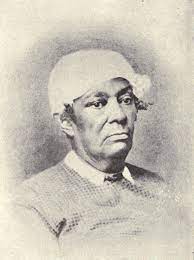
Born into slavery in 1798, Betsey Stockton was an African-American educator and missionary.
Betsey was a servant and student in the household of Ashbel Green. He was the president of the College of New Jersey (now Princeton University). He was also a close associate of the Stocktons. She was formally freed in 1817. She remained in the service of the family as paid household help. She took advantage of their extensive library. Additionally, she benefited from their willingness to teach her in their home.
MISSIONARY PIONEER TO HAWAII
Betsey was commissioned by the American Board of Foreign Missions as a missionary. She became the first single American woman sent overseas. Her contract stated that she was sent “neither as an equal nor as a servant, but a humble Christian friend.” Betsey traveled in company with 13 white missionaries on board a ship rounding the southern tip of South America. The missionaries were on their way to the Sandwich Islands (current-day Hawaii). Upon arrival, the missionaries settled in Lahaina, Maui. Betsey taught at the first mission school at Lahainaluna School for commoners. It is said that she was the first woman to learn the Hawaiian language while working on the Islands. She trained native Hawaiian Teachers who eventually took over her teachings once the missionaries departed.
Her contract stated she was not to be a servant. But, the circumstances of people of color in that day determined otherwise. She was a servant at least part-time to one of the families she traveled with.
CHALLENGES AND RETURN TO USA
In 1825, the matriarch of the family that she was helping became ill. She returned to the USA and stayed with them for about five years.
LATER CAREER AND COMMUNITY LEADERSHIP
Betsey taught briefly at an infant school in Philadelphia, Pennsylvania. She established a school for Native Americans at Grape Island, Canada. Then, she returned to Princeton in 1835 and taught in its school for blacks. In 1840, she helped found Princeton’s First Presbyterian Church of Color, which in 1848 was renamed the Witherspoon Street Church.
DEATH AND MEMORIAL
On October 24, 1865, Betsey passed away and was buried in Cooperstown, New York. Her gravestone reads:
“Of African blood and born in slavery, she became fitted by education and divine grace for a life of great usefulness. For many years was a valued missionary at the Sandwich Islands in the family of Rev. C. S. Stewart, and afterwards till her death, a popular and able Principal of Public schools in Philadelphia and Princeton, honored and beloved by a large circle of Christian friends.”
Like many early missionaries, she kept a diary of her travels. Versions of her diary were published in the Christian Advocate in 1824 and 1825.
CITATIONS
Loos, Constance K. “Betsey Stockton: A Pioneer in African American Education and Missions.” Journal of Presbyterian History, vol. 64, no. 3 (1986): 173–184.
Silva, Noenoe K. Aloha Betrayed: Native Hawaiian Resistance to American Colonialism. Duke University Press, 2004.
Stockton, Betsey. “Journal of Miss Betsey Stockton.” The Christian Advocate, vol. 2 (1824) and vol. 3 (1825). Edited by Ashbel Green. Philadelphia, PA.
 Loving Christ - Living Christ